Computation

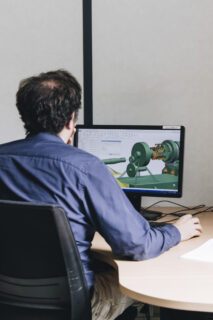
Vibratec specializes in providing advanced computational services that enhance the design, performance, and reliability of products across various industries such as aerospace, automotive, energy, and defense. Using state-of-the-art numerical simulations, Vibratec offers a wide range of services that target crucial aspects of product optimization.

By combining these advanced simulation techniques, Vibratec helps clients predict the performance of their products under real-world conditions, reduce the need for extensive physical testing, and optimize overall design and efficiency.
Industries Benefiting from Vibratec’s Expertise

Railway

Structural and acoustic analysis helps meet safety and comfort requirements in train designs

Energy

Optimized turbine and pipeline designs improve efficiency and reliability in wind and hydroelectric power systems

Aerospace

Simulations help improve the aerodynamics and structural integrity of aircraft and spacecraft

Automotive

Noise, vibration, and harshness (NVH) analysis enhances vehicle comfort and safety

Fluid-Structure Interaction (FSI)

The interaction between fluid flows and structures is a complex phenomenon that can impact both the mechanical integrity and performance of various systems. Fluid-structure interaction (FSI) simulations are critical in industries like aerospace, marine, and energy, where structures such as turbines, pipelines, or aircraft components are in constant contact with fluid environments. Vibratec’s FSI expertise enables the accurate prediction of how structures will behave under fluid pressures, flow-induced vibrations, and other dynamic conditions.

By simulating fluid forces and structural responses, Vibratec helps clients design systems that resist wear and tear, maintain stability, and perform efficiently under fluid loads. In sectors like wind energy, FSI simulations can optimize turbine blade designs to maximize energy output while minimizing material stress, thus improving overall efficiency and durability.

Electromagnetics

Electromagnetic simulations are essential for ensuring electromagnetic compatibility (EMC) and optimizing the performance of electrical systems. Vibratec’s electromagnetics expertise spans across sectors such as defense, telecommunications, and consumer electronics, where it is crucial to ensure that electromagnetic fields generated by devices do not interfere with each other or with external systems. This is especially relevant as products become more integrated with wireless technologies and sensitive electronic components.

For instance, in the automotive industry, electromagnetic simulation ensures that modern vehicles equipped with an array of sensors, control systems, and communication devices function without electromagnetic interference, improving safety and reliability. Vibratec’s electromagnetics services help manufacturers meet stringent EMC standards while optimizing product design for better energy efficiency and operational performance.

Structural Dynamics

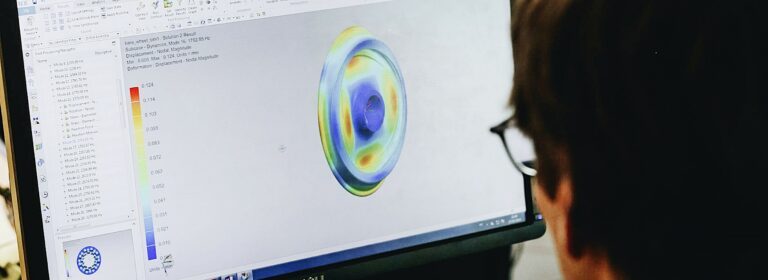
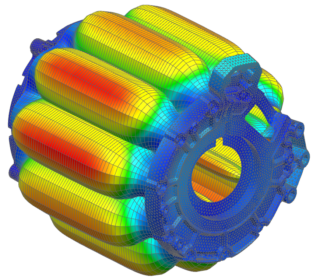
Structural dynamics focuses on understanding how structures respond to dynamic loads such as vibrations, impacts, and fluctuating forces. Vibratec utilizes dynamic analysis and simulation to study the vibrational behavior of structures, enabling the identification and mitigation of resonance and stress points. This is especially critical in industries like aerospace, automotive, and energy, where failure due to excessive vibration can have significant safety and financial implications. By predicting and managing dynamic behaviors, structural components are designed to be more robust and reliable.

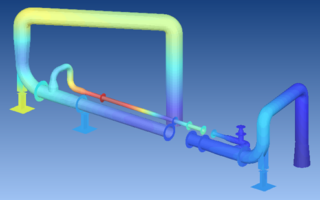
The benefits of this specialization are particularly evident in sectors like piping systems, where fluctuating internal pressures and flow variations can induce vibrations, potentially causing leaks or mechanical failure. Structural dynamics simulations allow for designs that withstand these operational stresses, minimizing maintenance costs and downtime while extending the system’s lifespan.

Acoustic Computation

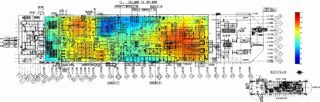
Acoustic computation helps address noise control and sound quality by simulating sound propagation and interactions within structures. Vibratec’s expertise in acoustic modeling enables industries to predict noise emissions from mechanical systems and reduce unwanted sounds through design adjustments before physical prototypes are built. This is especially important in industries where noise pollution is regulated or where sound quality is part of the product experience, such as in automotive and railway sectors.

For example, automotive companies rely on acoustic simulations to enhance passenger comfort by minimizing engine or road noise, while railway manufacturers may optimize train designs to meet noise standards, improving urban and suburban environments. Vibratec’s acoustic services not only ensure compliance with regulatory standards but also contribute to brand differentiation by improving sound experiences for end-users.

Importance of Computational Simulations

Vibratec’s suite of computational services reduces the need for costly and time-consuming physical prototyping by offering highly accurate virtual prototypes. These simulations allow engineers to test various design scenarios and operational conditions, identifying potential issues early in the development cycle. By predicting how products will behave in real-world environments, companies can optimize designs for durability, performance, and regulatory compliance.

Additionally, the use of computational simulations shortens the product development timeline and significantly lowers R&D costs, as fewer physical tests are required. This approach leads to more reliable and efficient designs, helping businesses innovate faster and with more confidence.

Computation

Let’s talk about your projects

    protection par reCAPTCHA