
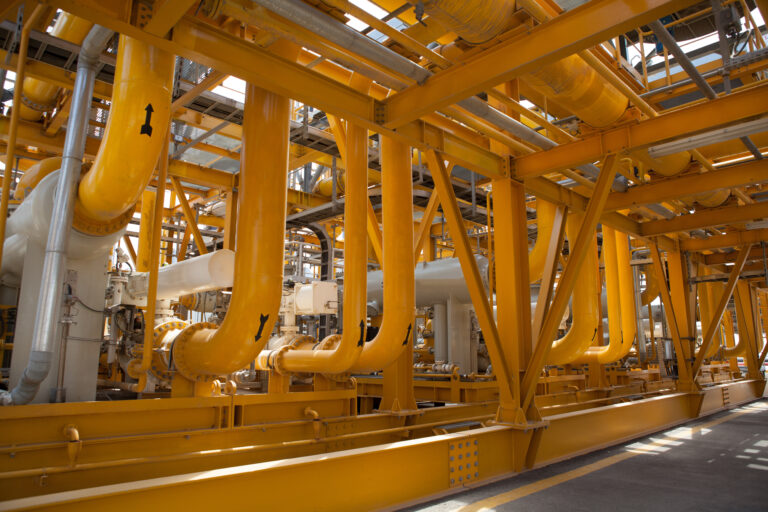
Pipe Vibration Fatigue

Duration: 2 days

Dynamics and vibration affect the performance and service life of oil and gas equipment, including oil rigs, vibrating screens, wellhead blowout preventers, oil and gas pipelines, drill bits, offshore platforms, and submarine pipelines. Vibration can cause fatigue failure and excessive noise in structures.

Statistics suggest that 21% of piping failures are due to fatigue and vibration. As a result, this phenomenon requires attention even at the design stage.


Participant Profile

Prerequisites

Sessions

• On request
• 20 people per session

Evaluation – Award

• Questionnaire in the form of a quiz
• Certificate of achievement

Objectives

  • Equip participants with knowledge & skills in piping vibration
  • Provide awareness to participants regarding existing screening & assessment methods
  • Make sure that participants are able to define good practice to avoid vibration-induced fatigue problems

Learning Outcomes

  • L1 – Knowledge: Define piping vibration issues
  • L2 – Comprehension: Describe current screening & assessment methods for potentially critical lines
  • L3 – Application: Apply theoretical methods for calculating “Likelihood of Failure” (LOF)
  • L4 – Analysis: Differentiate what constitutes “good practice” to avoid vibration-induced fatigue problems
  • L5 – Synthesis: Categorize different phenomena & sources of piping vibration: AIV / FIV / Pulsation
  • L6 – Evaluation: Explain the basic principles of piping vibration

Program

  • Piping vibrations: causes & consequences
  • The Energy Institude guidelines approach
  • Flow-Induced Vibration (FIV), Acoustic-Induced Vibration (AIV), & other piping vibrations
  • Troubleshooting vibration issues

Presented by

Najib FAZAIL

Irwan HALIM

Sign up for our Pipe Vibration Fatigue course

    protection par reCAPTCHA